Contact introduction for White-fronted lemurs
Reducing animal isolation through cooperation between zoos
Project objective
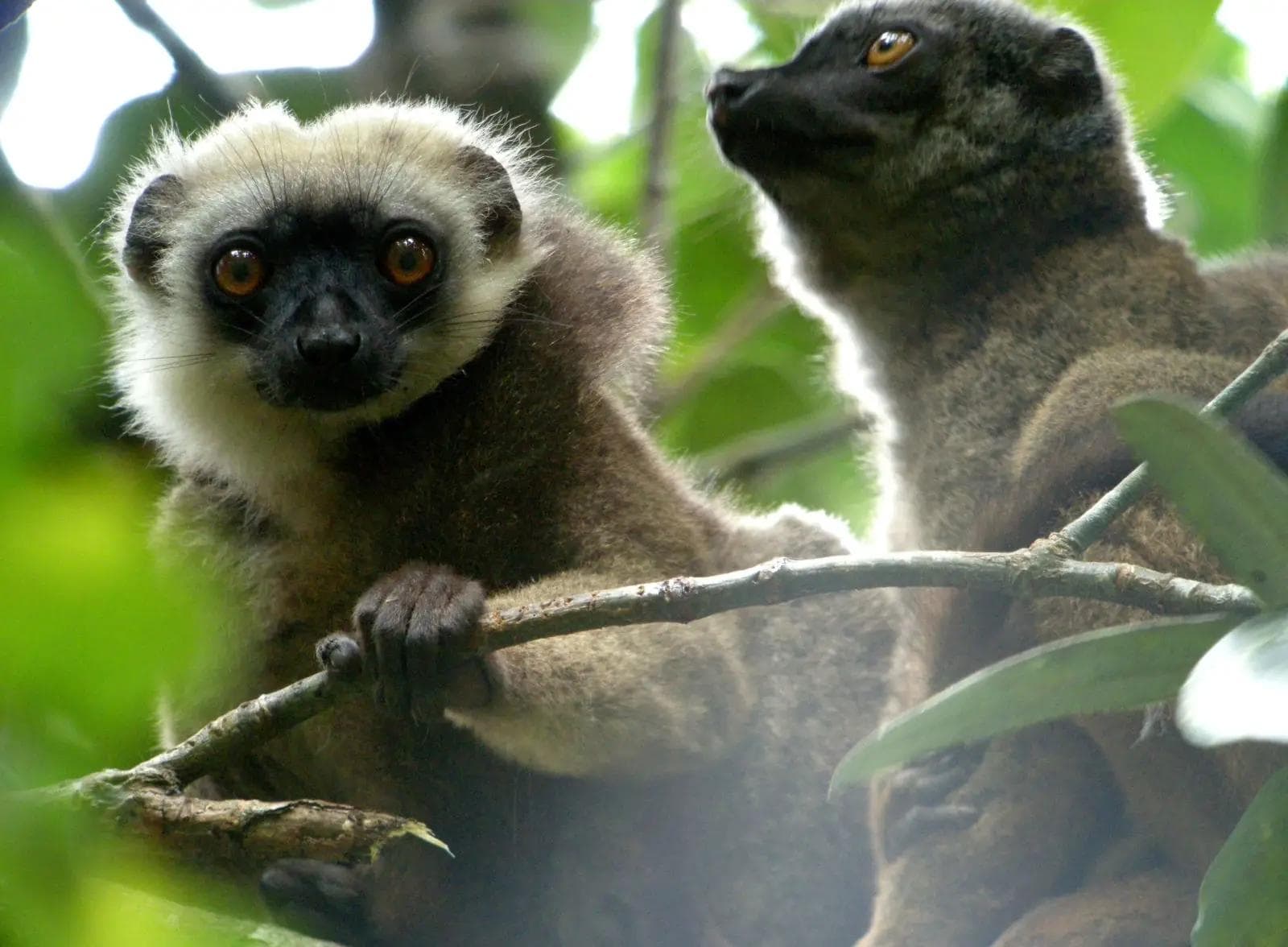
As part of the "Animal Welfare Commitment" (EBEA) programme, we collaborated with the park's team to facilitate connections between various zoological institutions to organise animal transfers. The aim was, in particular, to find a new companion for a female lemur who had been alone for several years.
Description
Following the death of her partner, a female white-fronted lemur was left alone. Our team is trained in the use of ZIMS 360, a crucial tool for our work. Using this tool, we were able to select the animals who could be paired with this female.
Following this, the team took over to organise and carry out the transfer. In parallel, we conducted behavioural monitoring before and after the introduction to ensure the new partners were getting along well and to adjust if necessary the food distribution methods, enrichment provided, and so on.
Results
The cohabitation is going very well, with positive social interactions observed from the outset. Additionally, undesirable behaviours previously seen in the female when she was alone have disappeared, and numerous positive social behaviours have been noted. The new male is still acclimatising to this new environment, and the team has adjusted his enrichment programme to provide daily appropriate stimulation for both individuals.
Animal welfare commitment
Social group management is both a crucial element for lemurs and can present challenges for teams: interactions within the group or changes in group composition. Therefore, communication within zoological parks and the involvement of all stakeholders are essential to minimise situations that could negatively impact welfare. The organisation of this transfer is a fine example of a shared commitment to animal welfare, not only at the level of the institution but also across the population.
Learn more about our solutions
- Implementation
Discover our offers for monitoring your animals' welfare.
- Methodology
Discover our animal welfare assessment method, based on questionnaires and behavioural observations.
- Animals
Discover the species we monitor and the specific programmes available for each.
More case studies
Discover some of our interventions and achievements in facilities.

Conures - tamarins: a mixed species exhibit
Parc de Clères et Ménagerie du Jardin des Plantes, France
Developing multi-species enclosures while ensuring the well-being of all animals.
Learn more
Making feeding more complex for tigers in captivity
Beekse Bergen, Netherlands
Using stimulating feeding devices for tigers to promote physical exercise and their well-being
Learn more
Cohabitation of female Pygmy hippos
Parc Animalier d'Auvergne, France
An innovative study to facilitate captive management
Learn more
Dietary transition: towards a fruit-free diet for great apes
La Palmyre, France
What impact on social relationships and microbiota in great apes? Behavioural and microbiotic effects of dietary change
Learn more